

Key Takeaways
- Cultural bike tours southern Europe offer immersive experiences, combining scenic routes with local culture and cuisine.
- Travelers can choose between self-guided, guided, e-bike, or bespoke tours to match their preferences and fitness levels.
- Southern Europe’s roads connect historic towns and breathtaking landscapes, creating unique cycling itineraries rich in culture and history.
- Accommodations and food play crucial roles in cultural bike tours, enhancing the overall experience of each journey.
- Cycling at a leisurely pace allows travelers to engage more deeply with local life rather than racing through landmarks.
Estimated reading time: 9 minutes
A good day on a bike in Southern Europe is not measured only in miles. It might begin with the smell of warm bread in a hill town bakery, pause at a family winery before lunch, and end in a harbor where fishing boats unload the evening catch. That is why cultural bike tours southern Europe appeal to travelers who want more than exercise – they want the feeling of moving through a place slowly enough to understand it.
The Mediterranean is especially suited to this kind of travel. Distances between villages are often short, landscapes change quickly, and daily life still spills into streets, markets, piazzas, and waterfronts. On a bike, you are not sealed off from any of it. You hear church bells, catch snippets of conversation, notice the shift from olive groves to vineyards, and arrive hungry at exactly the right hour.
What makes cultural bike tours in Southern Europe different
Not every cycling holiday is a cultural journey. Some trips are built around elevation, average speed, or famous climbs. Those can be wonderful, but they create a different rhythm. Cultural bike tours in Southern Europe are designed around immersion. The route matters, of course, yet the route is only part of the experience.
The best itineraries connect meaningful places rather than simply efficient roads. A quiet inland lane through Puglia is memorable because it leads to whitewashed towns, masserie, and olive oil producers. A coastal ride in Croatia matters because it links stone villages, island traditions, and meals shaped by the Adriatic. In Sicily, the distance between baroque towns becomes a story about architecture, agriculture, and layered history.
This is also where local route design matters. A map can show roads. It cannot tell you which village square comes alive in the late afternoon, which inland detour is worth the climb, or which restaurant still cooks a regional dish the old way. That knowledge changes a holiday from scenic to deeply rooted.
Why Southern Europe works so well by bike
Southern Europe rewards travelers who move at human speed. The roads are often older than the idea of modern tourism itself, threading between farms, historic centers, and coastlines where everyday life still feels visible rather than staged. Driving can be too fast. Walking can be too limited. Cycling sits in the sweet spot.
There is also extraordinary variety within relatively compact regions. In Tuscany, one day can bring cypress-lined hills, Romanesque villages, and a glass of Brunello at sunset. In Sardinia, you can ride from rugged inland landscapes to translucent coves while passing through villages where traditions remain proudly local. In Mallorca or Corsica, mountain roads and sea views share the same frame, but so do market towns, pastry shops, and family-run hotels.
Climate plays a role too, though timing matters. Spring and fall are often ideal for riders who want pleasant temperatures and lively local atmosphere without peak summer crowds. Summer can be fantastic on island routes or bike-and-boat trips, but heat changes the pace and may make e-bikes or shorter stages the better choice. The right season depends on the region, your comfort with warm-weather riding, and how much sightseeing you want folded into each day.
Choosing the right cultural bike tour southern Europe travelers will actually enjoy
The phrase sounds romantic, but the right trip is not the same for everyone. Some travelers picture leisurely vineyard rides with long lunches. Others want stronger daily mileage, with culture woven around a more athletic ride. Neither approach is better. The key is matching the itinerary to your habits, fitness, and travel style.
Self-guided tours suit independent travelers who enjoy moving at their own tempo. They work especially well in regions where navigation is clear and where towns are close enough to allow flexible starts, coffee stops, and unplanned visits. Guided tours are often ideal for travelers who want deeper context, local introductions, and the ease of having every detail handled while they focus on the ride and the destination.
E-bike tours have changed the category in the best possible way. They open hilly regions to a wider range of riders, help couples with different fitness levels travel happily together, and make room for the kind of cultural detours that can feel like too much on a demanding route. If your priority is enjoying villages, food, archaeology, and scenery without watching your energy budget all day, an e-bike can be a smart choice rather than a compromise.
Then there are bespoke trips, which make particular sense for culturally motivated travelers. If food is central to your holiday, the route can be built around markets, wine estates, cooking traditions, and regional specialties. If history matters most, overnight stops can favor towns with strong architectural or archaeological character. The best custom planning does not just alter mileage. It reshapes the meaning of each day.
The destinations where culture and cycling truly meet
Italy remains one of the richest landscapes for this style of travel, but each region tells a different story. Tuscany offers the postcard beauty many travelers imagine, yet its real strength lies in texture – medieval hill towns, cellar doors, local butchers, quieter backroads, and a rhythm that balances elegance with rural depth. Puglia feels more sunlit and elemental, with trulli, coastal roads, olive country, and a cuisine built on simplicity and freshness.
Sicily is one of the most rewarding choices for travelers who want intensity. The scenery is dramatic, but so is the culture. Greek ruins, Arab-Norman influences, volcanic landscapes, fishing towns, and unforgettable food all sit within one island. Sardinia offers a different kind of depth, often surprising first-time visitors with how distinct it feels from mainland Italy. Its beaches are famous, but inland villages, pastoral traditions, and regional cuisine are where many cyclists find the strongest sense of place.
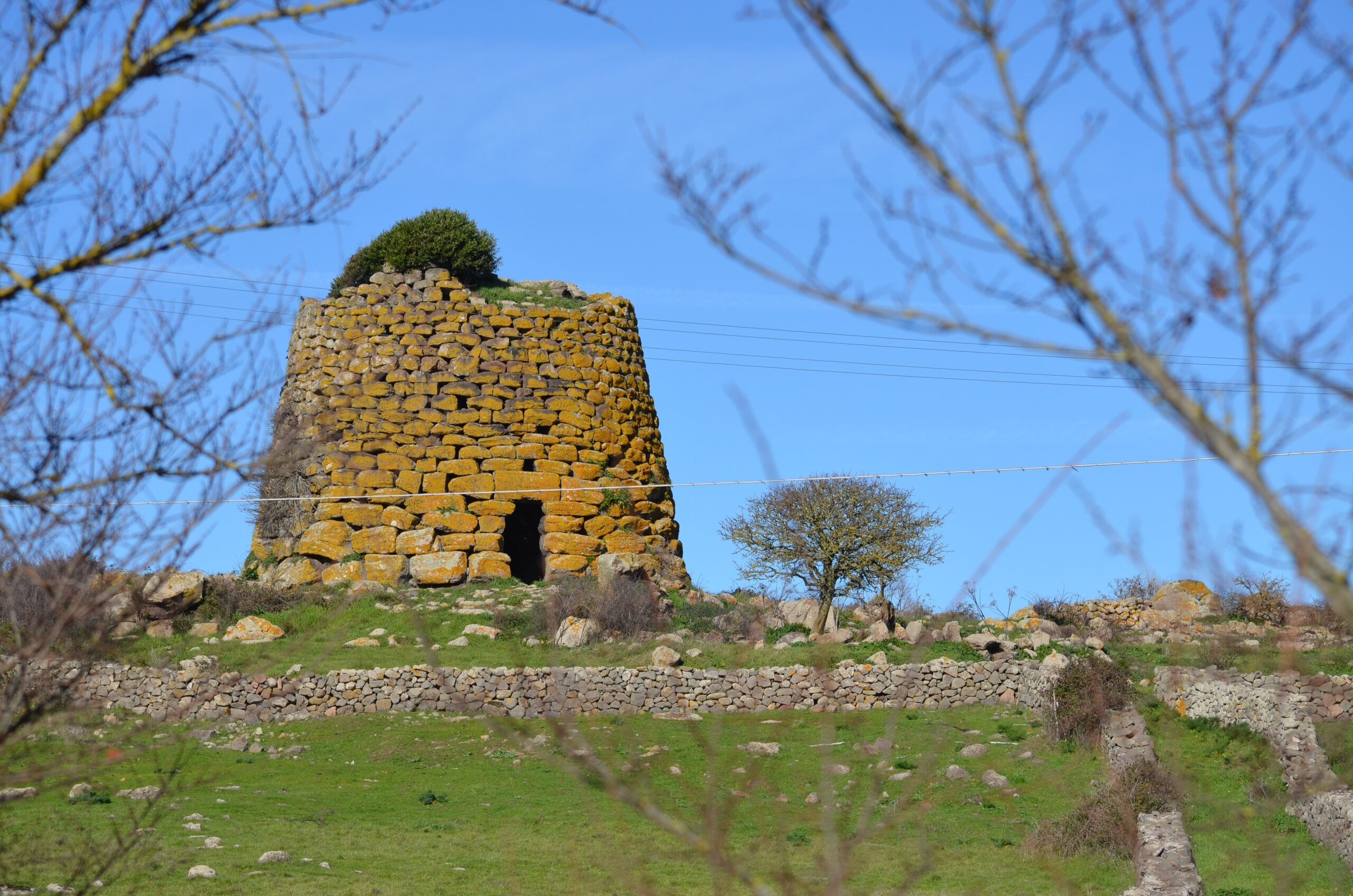
Unfortunately, less known is the Sardinian Nuragic Archeology. Cycling through Sardinia is like riding through an ancient, open-air museum: you will frequently spot or ride right past the magnificent remains of the island’s prehistoric civilizations. Most notably, you’ll encounter the iconic nuraghi, mysterious, mortarless stone towers built over 3,500 years ago, with more than 7,000 still dotting the landscape today. Giant’s Tombs, monumental burial chambers featuring massive stones and a curved layout resembling bull horns, named by later locals who believed only giants could have built them. Keep an eye out for the domus de janas (Houses of the Fairies), intricate rock-cut tombs predating the Nuragic era; according to local folklore, their tiny entrances were once home to magical fairies. Finally, your route might even lead you to ancient Sacred Wells, stunning underground temples with stonework so precise it stands as a breathtaking testament to an ancient water worship.
But the journey through time doesn’t stop at prehistory. Not to be forgotten are the stunning classical remains scattered along the coast. As you pedal closer to the sea, you might reach ancient cities like Nora or Tharros. Originally founded by the Phoenicians and later expanded into thriving Roman hubs, these archaeological gems allow you to ride past ancient amphitheaters, intricate mosaic floors, thermal baths, and towering Corinthian columns that stand proudly against the breathtaking backdrop of the crystal-clear Mediterranean Sea.
Croatia is ideal for riders drawn to coastal culture and historic stone towns. Depending on the route, you can combine mainland sections with islands, ferries, harbors, and bike-and-boat formats that make the journey feel fluid and varied. Mallorca has long appealed to serious cyclists, but it also works beautifully as a cultural destination when routes include market towns, monastery roads, family-run fincas, and time away from the busiest training corridors.
Albania is increasingly compelling for travelers who want something less expected. The landscapes are striking, hospitality is deeply felt, and the sense of discovery is real. It may not be the first place every rider considers, but for culturally curious travelers, that can be part of the appeal.
What to look for in a well-designed cultural cycling holiday
A strong itinerary does more than connect hotels. It builds a sensible daily rhythm. That means riding hours that leave room for lunch, village wandering, and the small moments travelers remember most. If every day feels overpacked, culture gets reduced to quick photos. If the distances are too short without enough substance, the trip can feel thin. Balance is everything.
Accommodations matter more than many people expect. On a cultural trip, where you sleep is part of the experience. Character hotels, restored farmhouses, boutique inns, and family-run properties often add far more to the journey than anonymous convenience. The same goes for food planning. Generic tourist restaurants can flatten even the most beautiful route, while one well-chosen trattoria, konoba, or agriturismo can define the day.
Support also deserves attention. Luggage transfers, route notes, GPS tracks, and on-the-ground assistance sound practical because they are practical. But they also protect the emotional side of the trip. When logistics work, you stay open to the destination. When they do not, even a stunning region can start to feel stressful.
This is where specialist local operators make a real difference. Companies built by regional cycling experts, including Mediterras, know which roads feel safe, which hotels consistently deliver, and which experiences are worth including rather than simply marketable on paper. That kind of curation is not about luxury for its own sake. It is about trust.
The real trade-off: seeing more or feeling more
Many travelers planning Southern Europe face the same temptation – trying to cover too many places in one trip. It is understandable. The region is full of icons. But cultural travel by bike tends to improve when you resist the urge to collect destinations.
A shorter route with depth often delivers more than an ambitious cross-region itinerary. Three nights in the right area can reveal market patterns, local dishes, and village personality in a way that one-night stops never will. If your goal is connection, choose fewer bases and better pacing. If your goal is broad sampling, a point-to-point route can work well, but only if the daily stages still leave breathing room.
That is the heart of these journeys. You are not chasing landmarks from behind a windshield. You are arriving under your own power, with enough time and appetite to notice where you are. Southern Europe gives generously to travelers who move that way.
If you choose carefully, the ride stays with you long after the tan fades – not as a checklist of roads completed, but as a collection of flavors, conversations, landscapes, and places that felt briefly, wonderfully familiar.