

Key Takeaways
- The best self guided cycling holidays Europe offers combine independence with local knowledge for a rich experience.
- Top destinations include Tuscany for its stunning scenery, Puglia for its coastal charm, and Sicily for intense cultural experiences.
- Cycling in regions like Croatia and Mallorca provides variety, with routes suitable for different skill levels.
- Local route design greatly enhances the experience, ensuring that travelers enjoy hidden gems and authentic encounters.
- Choose destinations based on personal preferences, such as desired pace, landscape types, and accommodation styles.
Estimated reading time: 9 minutes
You feel it on the first morning: the road is quiet, your bags have already gone ahead, and the day belongs to you. That is the real appeal of the best self guided cycling holidays Europe offers – not just the freedom to ride at your own pace, but the chance to move through a place slowly enough to taste it. A vineyard lunch in Tuscany, a fishing village in Croatia, a whitewashed town in Puglia – these are not extras. They are the point.
A self-guided cycling holiday works best when independence and local knowledge meet in the right proportion. You want the liberty to stop for a swim, detour to a hilltop village, or linger over a long dinner. You also want routes that have been tested, hotels chosen for character as well as comfort, and support that feels invisible until you need it. Europe has no shortage of cycling destinations, but not all of them deliver that balance equally well.
What makes the best self guided cycling holidays in Europe?
The strongest trips are not always the most famous ones. A great self-guided route has roads that are enjoyable rather than simply scenic, daily distances that leave room for living, and a rhythm that suits the destination. Some regions are ideal for riders who want smooth rolling days and excellent inns. Others are better for gravel lovers, stronger climbers, or e-bike travelers who want drama without exhaustion.
The other piece is cultural density. In Southern Europe especially, cycling rewards curiosity. A 35-mile ride can include Roman ruins, a family-run winery, a bakery stop, and a harbor dinner. That is why Mediterranean regions often stand out. They offer not just beautiful roads, but villages with distinct character, food rooted in place, and a pace of life that suits this style of travel.
12 best self guided cycling holidays Europe travelers should consider
Tuscany, Italy
Tuscany remains popular for good reason. The landscape feels made for cycling: cypress-lined roads, vineyard ridges, medieval towns, and long lunches that justify a slower pace. For self-guided riders, the sweet spot is often southern Tuscany and the Val d’Orcia, where the scenery is extraordinary and the riding can be as gentle or challenging as you choose.
The trade-off is obvious. Tuscany is well known, and in peak season some areas feel less hidden than they once did. Still, if your idea of a bike holiday includes Brunello wine, hilltop towns, and elegant countryside hotels, it earns its place.
Puglia, Italy
Puglia suits travelers who care as much about atmosphere as elevation gain. The roads are generally quieter, the terrain is friendlier than much of central Italy, and the experience leans toward coastal views, olive groves, baroque towns, and long evenings over seafood.
It is especially strong for couples, first-time bike travelers, and e-bike guests who want culture without constant climbing. If you want heroic mountain stages, look elsewhere. If you want sun, food, and deeply local southern Italian character, Puglia is one of the best choices in Europe.
Sicily, Italy
Sicily is for riders who want intensity. The island delivers layered history, volcanic landscapes, dramatic coastlines, and food that can become the headline of the trip. A self-guided route here can move from Greek ruins to fishing ports to inland villages where tourism still feels secondary to daily life.
Sicily does require a little more tolerance for contrast. Roads vary, drivers vary, and some stages feel wilder than polished northern European routes. But for travelers who want substance and surprise, it is one of the most rewarding places to ride.
Sardinia, Italy
Sardinia has some of the most satisfying road cycling in the Mediterranean. The island combines clear sea views, empty inland stretches, and roads that seem built for long steady riding. It also has a distinctly different cultural identity from mainland Italy, which gives the journey a stronger sense of place.
This is a smart option for riders who want space. Compared with busier destinations, Sardinia often feels calmer and more elemental. The caveat is that some inland sections are remote, so route design and support matter more here than in compact regions with services everywhere.
Croatia
Croatia is one of the most versatile answers to the question of the best self guided cycling holidays Europe can offer. You can ride islands, coastlines, vineyards, and historic port towns in a relatively compact trip. The Adriatic light, stone villages, and sea-driven cuisine give each day a freshness that is hard to replicate elsewhere.
It works particularly well for travelers who like variety. You may cycle among lavender fields one day and ferry to a different island the next. Some transfers are part of the experience, though, so if you want a purely linear ride with no logistical texture, another destination may suit you better.
Mallorca, Spain
Mallorca has long been associated with serious road cycling, but it also works beautifully for self-guided travel. The island offers excellent roads, bike-friendly infrastructure, strong hotel options, and routes that can be scaled for different abilities. You can build a trip around iconic climbs or stay mostly in the rolling countryside and coast.
The limitation is that parts of Mallorca are no secret. In spring especially, you will share the island with many other cyclists. For some riders that energy is part of the appeal. For others, a quieter Mediterranean region may feel more intimate.
Corsica, France
Corsica is one of the more underrated choices for experienced cyclists. It is rugged, aromatic, and dramatic, with mountain roads that plunge toward the sea and villages that feel fiercely local. The island has a wild beauty that rewards riders who do not mind earning their views.
This is not the easiest self-guided holiday on the list. Climbs can be real climbs, and daily profiles deserve honest attention. But if you want a trip with edge, Corsica is unforgettable.
Albania
Albania is for travelers who want Europe before it gets too polished. The riding can be spectacular, especially along the Riviera and through mountain-backed villages, and the hospitality often surprises first-time visitors. It still feels like a place where the journey brings genuine encounters rather than staged tourism.
Because tourism infrastructure is developing, the best trips here depend heavily on local route knowledge and carefully chosen accommodations. When done well, Albania feels adventurous in the right way, not stressful.
Slovenia
Slovenia is compact, green, and remarkably varied. You can combine alpine scenery, vineyard country, and charming small towns without long transfers. For riders who value organization, clean infrastructure, and a high standard of hospitality, it is a very comfortable entry point into self-guided cycling.
Compared with the Mediterranean south, it can feel less sensorially intense in terms of food and coastal life. That is not a weakness, just a question of taste.
The Dolomites, Italy
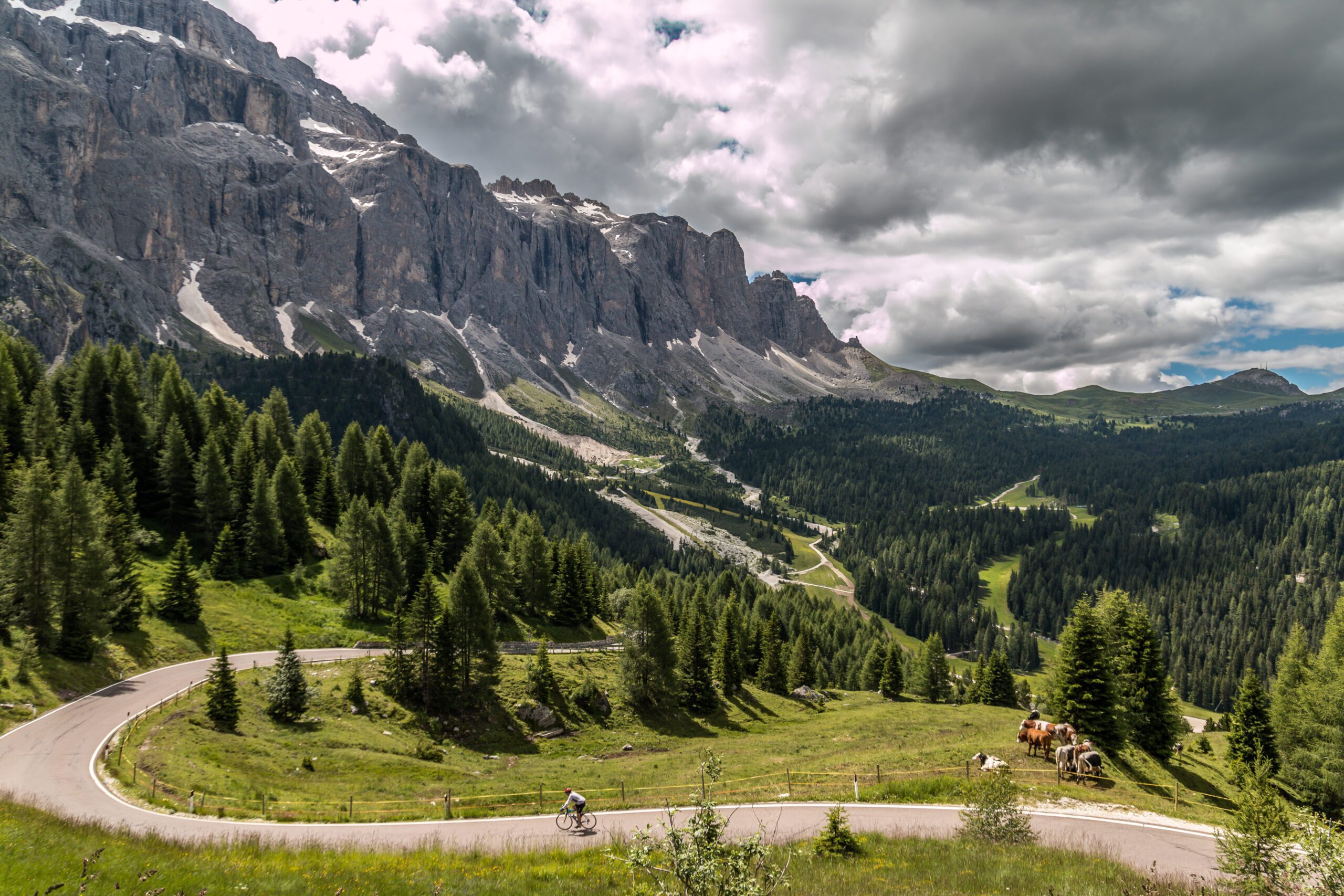
The Dolomites offer dramatic limestone peaks, pristine alpine pastures, and some of the most iconic mountain passes in cycling history. It is ideal for riders seeking monumental scenery and the physical reward of a long, steady climb. The unique blend of Italian and Austrian cultures means the local food is hearty and the post-ride hospitality is exceptional. The elevation here is serious, making it best suited for experienced cyclists or those using e-bikes.
Alpine weather can change rapidly, and the most famous passes attract heavy motorcycle and vehicle traffic during the peak months of July and August.
Piedmont, Italy
Piedmont delivers a sophisticated journey through rolling vineyards, historic estates, and world-class culinary towns. It suits riders who believe a day in the saddle should always end with an outstanding glass of wine and exceptional local gastronomy. The rural roads are famously quiet, winding gracefully through the landscapes that produce Barolo and Barbaresco. Do not let the idyllic vineyard setting fool you; the hills here are punchy and relentless, requiring solid fitness.
Autumn is visually stunning but can bring thick morning fog, and the peak white truffle season in late fall often drives up accommodation prices.
Umbria, Italy
Umbria provides the classic central Italian landscape of ancient olive groves, dense forests, and medieval hilltop villages, but with a quieter, less polished feel than neighboring Tuscany. It is perfect for travelers looking for an authentic, slow-paced rhythm and deep historical roots. The riding feels immersive, and the local encounters often feel more genuine.
Because almost every notable town was built defensively on a hill, you must be prepared for steep finishing climbs at the end of your daily ride. Summer heat can be punishing in the valleys, making mid-spring and early autumn the smartest times to visit.
How to choose the right trip for you
Start with the kind of days you actually want, not the destination name you have saved on your phone. If your ideal ride ends with a swim and grilled fish, island Croatia or Puglia may fit better than a mountain route in Corsica. If you want legendary climbs and smooth road surfaces, Mallorca will make more sense than a softer cultural itinerary.
Be honest about your relationship with hills. Many travelers say they want a challenge, when what they really want is satisfying riding without arriving too tired to enjoy dinner. That is where e-bikes have changed the conversation for the better. They do not flatten a destination’s character. They expand who can enjoy it.
Accommodation style matters too. Some self-guided trips focus on simple, practical overnights. Others build the journey around boutique stays, agriturismos, waterfront hotels, and places where the evening is part of the memory. For many premium travelers, that difference is not minor.
Why local route design makes the difference
A self-guided holiday is only as good as the decisions behind it. The wrong road can drain the joy from a beautiful region. The right detour can become the day you remember most. That is why locally designed itineraries matter so much, especially in Southern Europe, where the best rides often depend on hidden roads, seasonal timing, and knowing which town is worth an overnight and which is only worth a coffee stop.
This is where specialists with real ground knowledge stand apart. Mediterras, for example, builds cycling holidays through regions its team knows firsthand, with routes and stays shaped by local guides rather than generic mapping software. That kind of knowledge shows up in small details: a quieter inland road, a better lunch village, a hotel with character instead of just availability.
The best self-guided cycling holiday is rarely the one with the longest route description or the most famous photos. It is the one that feels like it was made by people who know the land well enough to help you move through it naturally. Pick the place that matches your pace, your curiosity, and the way you want your days to feel, and Europe will do the rest.