

Key Takeaways
- To enjoy how to combine cycling and food, find a balance between riding and tasting, allowing for both experiences to enhance each other.
- Plan meals with flexibility and avoid rushing; respect local customs and dining times for an authentic experience.
- Consider route selection based on local cuisine; each destination offers unique landscapes and food connections.
- E-bikes can make cycling holidays more accessible, ensuring different riders stay together without missing out on local flavors.
- Incorporate local food experiences like markets and tastings, but avoid packing too many in a row to keep the journey enjoyable.
Estimated reading time: 8 minutes
A perfect Mediterranean day can start with an espresso in a village bar, climb through olive groves before the heat arrives, and finish at a family table where the pasta, fish, or cheese tells you exactly where you are. That is how to combine cycling and food in a way that feels generous rather than overplanned: let the ride lead you to the table, and let the table give meaning to the ride.
For many travelers, food is the reason to visit Italy, Croatia, Mallorca, or Greece. Cycling is the best way to reach the places where those flavors still belong to daily life: a bakery opening at dawn, a small winery above the coast, a farm kitchen on a quiet country road. The secret is not riding as many miles as possible. It is choosing the right rhythm.
How to combine cycling and food without rushing
The best bike-and-food vacation is built around balance. A challenging mountain stage and a long tasting menu can both be wonderful, but they do not always belong on the same day. Think first about the kind of experience you want. Are you traveling to train, to taste, or to share relaxed days with a partner or group of friends? Your answer should shape the route, bike choice, and meal schedule.
On a food-focused cycling trip, shorter riding days often give more. A route of 25 to 45 miles can still include a satisfying climb, beautiful views, and a proper lunch stop, while leaving time to shower, walk through town, and enjoy dinner without checking the clock. Strong road riders may prefer longer days, but even then, one or two lighter stages can make room for a cooking class, winery visit, or slow afternoon by the sea.
The Mediterranean also has its own daily clock. In summer, it makes sense to ride early, pause during the warmest hours, and return to the bike only if needed in the late afternoon. This is not lost time. It is the moment for a long lunch, a swim, or a nap before an evening aperitivo.
Match the route to the local table
Every destination has a different relationship between landscape and cuisine. In Tuscany, rolling roads connect vineyards, olive mills, butcher shops, and hill towns built around market squares. In Puglia, flatter lanes pass centuries-old olive trees, whitewashed villages, and coastal fishing communities, making it easier to combine daily riding with generous lunches.
Sicily brings more contrast. One day may lead through citrus groves and baroque towns, another toward Mount Etna, where volcanic soil changes the wine, pistachios, and vegetables on the plate. Sardinia is ideal for travelers who like wild scenery and food with a strong identity: pecorino cheese, culurgiones pasta, roast suckling pig, and fresh seafood along the coast.
Croatia and Mallorca offer another kind of pleasure. Island roads can be quiet and dramatic, with stops for grilled fish, local olive oil, and wines that rarely travel far from home. The terrain matters here. A hilly route can be rewarding, but it may leave little appetite for an ambitious afternoon tasting. An e-bike is often the smart choice, not a compromise, especially for couples or friends with different fitness levels.
Plan meals as part of the ride
Food stops should not be accidental. The most memorable ones are planned with enough flexibility to follow the day. A local guide or experienced route designer knows which village bakery is open on Monday, where lunch is served after 2 p.m., and which restaurant is worth a detour. These details are what turn a nice route into a real local experience.
Start the morning with a breakfast that supports the ride ahead. A pastry and coffee are part of Mediterranean culture, but on a longer day, add yogurt, eggs, fruit, bread, or oats if available. Save the heavier specialties for after the bike is parked. Riding on too little fuel is the quickest way to turn a beautiful route into a difficult one.
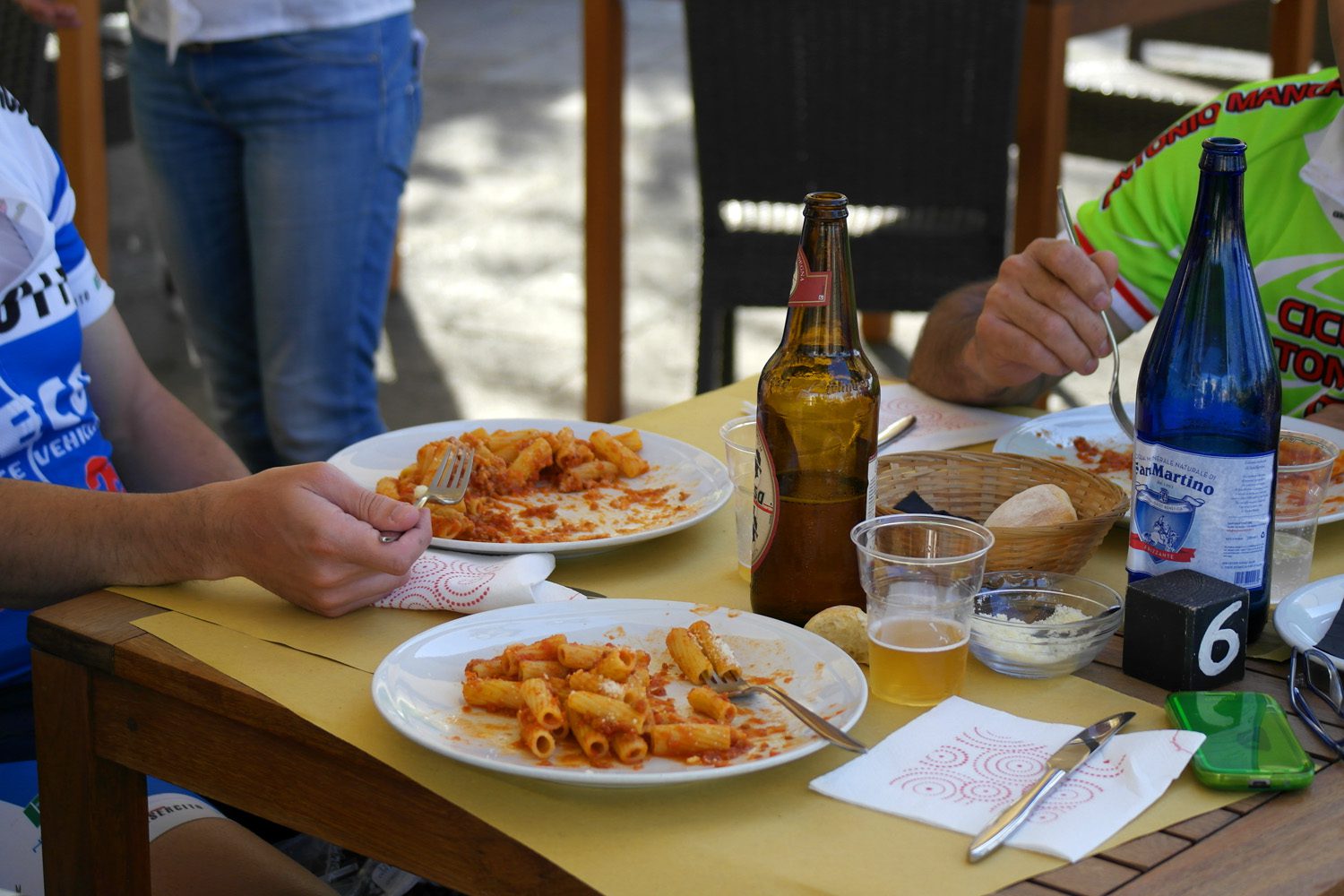
For lunch, choose according to the afternoon. If you still have a serious climb ahead, a simple panino, salad, soup, or pasta portion may be better than a three-course feast. If the day ends in the lunch town, sit down properly. Order the local dish, ask what is in season, and give yourself time. The goal is not to eat lightly at every meal. It is to eat well at the right moment.
Dinner is where the day can open up. After an easy spin through vineyards or along the sea, there is no reason to avoid handmade pasta, grilled lamb, or a local dessert. Just remember that Mediterranean dining starts later than many US travelers expect. A small afternoon snack and a relaxed aperitivo make that rhythm easy to enjoy.
Carry fuel, not a picnic basket
A bike jersey or handlebar bag should hold enough for the road: water, electrolytes when it is hot, fruit, nuts, a small sandwich, or an energy bar. You do not need to carry lunch for an entire week when villages are nearby. In fact, leaving room to stop is part of the point.
Still, do not rely on every small town having an open shop. Rural areas can be wonderfully quiet, and quiet sometimes means limited services. On self-guided routes, check the day’s notes before leaving. Carry more water than you think you need on hot coastal roads or inland climbs, and keep a small emergency snack even when a trattoria is planned.
Choose the right trip style for your appetite
A guided cycling tour suits travelers who want the local story with their meal. A good guide can explain why a cheese tastes different in one valley, introduce the producer behind a bottle of wine, and adjust the day when a market, festival, or unexpected restaurant opportunity appears. This format works especially well for groups who enjoy sharing the experience around one table.
A self-guided tour gives more independence. It is excellent for couples and confident travelers who want to ride at their own pace, stop for photos, and linger over lunch. The quality of the route planning is essential. You want clear navigation, well-chosen accommodations, practical daily notes, and support if plans change.
E-bikes make food-led cycling holidays accessible to more people. They reduce the pressure of hills and headwinds, allowing riders with different abilities to stay together. You still earn your aperitivo, but nobody needs to skip the winery because the final climb felt too big.
For a more distinctive experience, consider gravel riding or a bike-and-boat itinerary. Gravel routes can reach farms, forests, and less-visited villages, though surfaces require a little more confidence. Bike-and-boat trips offer the pleasure of island hopping without packing and unpacking every day, with fresh coastal meals waiting after each ride.
Make room for local food experiences
Restaurants are only one part of a regional food culture. A morning market reveals what people are cooking at home. An olive oil tasting teaches you to notice bitterness, pepperiness, and freshness. A cheese producer, fisherman, baker, or winemaker can make a familiar ingredient feel completely new.
Avoid trying to schedule every tasting on consecutive days. Wine, rich lunches, and long rides ask a lot from the body. Alternate indulgent days with simpler meals and easier routes. If you are planning a custom itinerary, ask for one or two experiences that feel personal rather than a long checklist of tastings.
At Mediterras, local guides build routes with this reality in mind: the road, the weather, the opening hours, and the people behind the food all matter. The best address is not always the most famous one. Sometimes it is the small place where the owner remembers the name of the farmer who brought the tomatoes that morning.
A few rules that keep the day enjoyable
Respect the road before the reservation. Leave enough time to arrive without racing, especially on hot days or unfamiliar descents. Keep alcohol for after the riding is finished, and drink more water than usual when enjoying wine at dinner. If you have dietary needs, communicate them early, particularly in rural areas where menus may be traditional and limited.
Also, stay curious without treating every meal as a test. You may love a famous regional specialty, or you may prefer the simple plate of seasonal vegetables beside it. Both are valid. The real pleasure comes from eating food in the place that made it, after traveling through the landscape that shaped it.
Tomorrow, choose the road that passes the small town you would otherwise miss. Park the bike, ask what is good today, and give the table as much attention as the view. That is where a cycling vacation becomes a memory with real flavor.