


Key Takeaways
- Choosing between Sardinia or Sicily cycling depends on your preferences: quiet landscapes or cultural intensity.
- Sardinia offers spacious roads, beautiful coastlines, and a peaceful atmosphere, while Sicily features vibrant culture, climbs, and dramatic contrasts.
- Both islands cater to various cycling styles, with Sardinia suitable for relaxed rides and Sicily ideal for more challenging and varied routes.
- For a rewarding experience, a well-planned itinerary is crucial, taking into account local conditions, road types, and scenic stops.
- Ultimately, let your cycling style guide your choice, as each island provides unique beauty and experiences.
Estimated reading time: 8 minutes
A coffee at the bar, a perfectly tuned bike, and a long Mediterranean road waiting outside: this is where the choice begins. Sardinia or Sicily cycling is not simply a question of choosing one Italian island over another. It is about deciding whether your ideal bike holiday feels more like a quiet escape through wild coastal landscapes, or a vivid journey through villages, volcanoes, markets, and centuries of history.
Both islands reward cyclists with serious beauty, memorable food, and roads that feel made for discovery. But they offer very different rhythms. Sardinia is spacious, elemental, and often wonderfully quiet. Sicily is intense, layered, and full of dramatic contrasts. The right choice depends on how you like to ride, what you want to see when you stop, and how much climbing you want in your day.
Sardinia or Sicily Cycling: Start With Your Ride
The simplest way to choose is to think beyond daily mileage. Ask yourself what you want to remember when the bike is back in the garage. Is it a silent road above turquoise water, the scent of maquis shrubland, and a long lunch with fresh seafood? Sardinia may be your island. Is it a climb with Mount Etna in view, an ancient baroque town, and a plate of pasta alla Norma at a busy family trattoria? Sicily may call you more strongly.
Neither destination is only for strong road cyclists. Both work beautifully for e-bikes, couples with different fitness levels, and travelers who want to mix cycling with beaches, wine, architecture, and time at the table. The difference is in the character of the journey.
Choose Sardinia for Space, Sea, and Quiet Roads

Sardinia feels like its own Mediterranean world. Its coastline is famous, but the real pleasure of cycling here is how quickly you leave the familiar view behind and enter wide open country. Granite hills, cork forests, small shepherd villages, clear coves, and long stretches of empty road create a sense of freedom that is difficult to find in many European destinations.
For recreational riders, Sardinia has a major advantage: many routes can be designed with low traffic and a very natural flow. Around the southwest, the Costa Verde, Alghero, the Sinis Peninsula, Ogliastra, and the Gallura region, cyclists can enjoy extraordinary scenery without constantly passing through busy towns. The roads are rarely completely flat, but the climbing often comes in rolling waves rather than relentless walls.
What Sardinia feels like on a bike
Sardinia is ideal for travelers who enjoy being outdoors from morning until evening. You may start beside the sea, climb gently through a quiet interior, and finish at a small agriturismo where the menu follows the season. The island has a strong rural identity, and that comes through in its food: pecorino, carasau bread, roasted meats, handmade pasta, local honey, and excellent seafood near the coast.
The trade-off is that Sardinia can feel more remote. This is part of its magic, but it also means fewer large towns and fewer spontaneous sightseeing stops on some routes. If your dream vacation includes grand monuments, lively piazzas, and a different historic center every afternoon, Sicily offers more density.
Wind is another real factor. Along Sardinia’s western and northern coasts, it can shape the day more than the elevation profile. A local route designer will choose direction, stage length, and overnight stops carefully, so the wind becomes part of the experience rather than a battle.
Sardinia is especially good for a self-guided cycling holiday. The island’s landscapes invite you to ride at your own pace, stop for a swim, linger at lunch, and enjoy the silence. It is also an excellent place for gravel riders, thanks to its network of country lanes, coastal tracks, and quiet backroads.
Choose Sicily for Culture, Climbing, and Big Contrasts
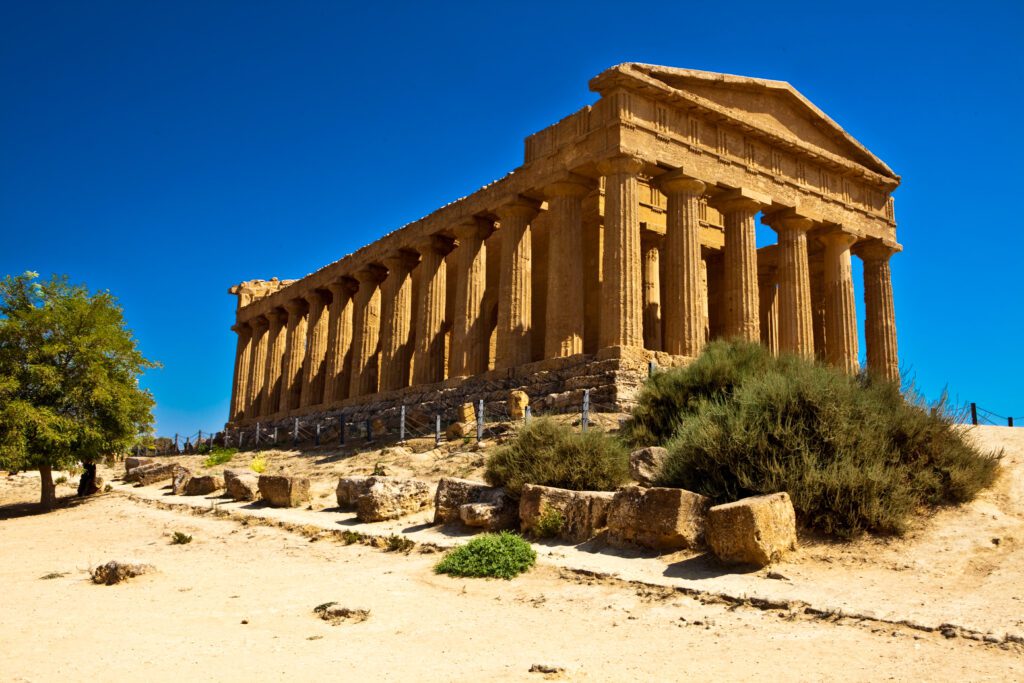
Sicily is larger, busier, and more theatrical. On one ride, you can pass citrus groves, Greek ruins, black volcanic stone, vineyards, and villages where time seems to move around the afternoon passeggiata. The island brings more intensity to every day, including the riding.
Cycling in Sicily suits riders who enjoy a destination with many layers. The southeast, around Noto, Ragusa, Modica, and Siracusa, is particularly rewarding for a bike holiday. Here, rolling roads connect honey-colored baroque towns, dry-stone walls, olive groves, and farms producing ricotta, chocolate, wine, and olive oil. It is cultural cycling at its best, with enough climbs to feel satisfied but plenty of reasons to stop.
Sicily’s climbs are part of the story
For experienced road cyclists, Mount Etna is one of Italy’s unforgettable rides. Its slopes change as you climb: vineyards and orchards below, lava fields and pine forests higher up, then an almost lunar world near the summit areas. You do not need to ride all the way to the highest point to understand the power of Etna. Even a lower route around the volcano is a remarkable day on the bike.
Sicily also offers scenic coastal riding, especially in the west near Trapani, Marsala, and the salt pans, or in the north around Cefalù and the Madonie Mountains. Yet cyclists should be realistic: Sicily’s roads are more varied than Sardinia’s. Some are excellent, while others can be rougher, narrower, or busier near cities. Route knowledge matters here. The best itineraries use quieter secondary roads and time arrivals and departures to avoid traffic where possible.
The reward is enormous cultural richness. Sicily is the island for travelers who want their cycling holiday to feel like a moving feast. A short detour can lead to a Norman cathedral, a Greek temple, a village bakery, or a small producer pouring wine made from grapes grown in volcanic soil.
The Practical Differences That Matter
Sardinia generally feels easier to manage for riders seeking calm roads and a peaceful holiday pace. It is not flat, but it is often more forgiving in its rhythm. Sicily offers more variety in terrain, towns, and cultural sites, but it can demand stronger route planning and greater confidence on the bike.
For weather, both islands are best in spring and fall. April through June and September through October usually bring pleasant riding temperatures, green landscapes in spring, and warm sea conditions in early fall. July and August can be very hot, especially inland and in Sicily. An e-bike, early starts, shorter stages, and long lunch breaks make summer possible, but these months are not the first choice for riders who want long, demanding days.
Sardinia is often the better match for beach lovers and travelers seeking a slower, more private feeling. Sicily is stronger for history lovers, food-focused travelers, and riders who enjoy a holiday with more energy and variety around them. For a first European cycling trip, either can work very well with the right route and support level.
Which Island Fits Your Cycling Style?
If you are a couple with different riding speeds, Sardinia’s quieter roads and e-bike-friendly rolling terrain can make the trip wonderfully relaxed. Choose coastal stages with luggage transfers, boutique stays, and enough free time for swimming or a sunset aperitivo. You will still ride proper miles, but the day will never feel rushed.
If you are a group of friends looking for challenging road rides, Sicily has more opportunities for iconic climbing and ambitious elevation. An itinerary combining Etna with the southeast or western wine country gives the week a powerful mix of athletic satisfaction and local life.
Families and culturally curious travelers can enjoy both islands, particularly on custom e-bike itineraries. In Sardinia, focus on shorter scenic stages, beaches, farms, and easy coastal exploration. In Sicily, build in two-night stays so there is time to visit towns such as Ortigia, Noto, or Ragusa without needing to pack every morning.
For gravel cyclists, Sardinia usually has the edge. Its wide landscapes and less populated interior create an adventurous but peaceful setting. Sicily can also be excellent, especially through vineyards and country lanes, although surface conditions require more careful planning.
Let the Route Decide, Not Just the Island
The best Sardinia or Sicily cycling trip is rarely decided by a map alone. A route can turn a beautiful island into an easy, joyful holiday, or make a promising trip feel too hot, too busy, or too difficult. Daily elevation, road surface, wind direction, hotel location, restaurant options, and the distance between water stops all matter.
This is why a thoughtfully designed itinerary is worth so much. Local guides know which coastal road is peaceful before summer traffic arrives, which village restaurant makes the dish you came to taste, and when a short transfer creates a much better riding day. At Mediterras, routes are shaped around these details, whether you prefer a guided ride, a self-guided holiday, a gravel adventure, or an e-bike journey built around food and culture.
Choose Sardinia when you want room to breathe and ride through a wilder Mediterranean landscape. Choose Sicily when you want every day to bring another flavor, story, or climb. Then let your own riding style shape the route – the island will do the rest.